

How Matcha May Support Focus and Brain Health
Posted on April 02 2023,
Uji Matcha · Focus & Wellbeing
Matcha is a finely ground Japanese green tea powder that has been prepared in Kyoto and Uji for centuries. Unlike regular green tea, where the leaves are steeped and discarded, matcha is made by stone-milling the whole leaf into a fine powder that is whisked into hot water. You drink the entire leaf, which means you enjoy more of its natural plant compounds in each serving.
In recent years, matcha has become popular in lattes, smoothies and desserts, but in Japan it has long been valued as a drink for quiet focus and mindful attention. Modern research is beginning to explore why matcha feels different from coffee and how its unique combination of caffeine, L-theanine and antioxidants may support mental clarity and long-term brain health.
In this article, we’ll look at what current studies suggest about matcha and cognitive function, why the caffeine–L-theanine combination is so interesting, and a few simple matcha recipes you can enjoy as part of a balanced lifestyle.
Important:
The information in this article is for general education only and is not medical or nutritional advice. Matcha should not be used to treat or prevent any disease. If you are pregnant, breastfeeding, have a medical condition, take medication, or are sensitive to caffeine, please speak with your healthcare professional before changing your diet.
Quick summary
◆Matcha combines caffeine with the amino acid L-theanine, a pairing that research suggests may support calm, focused attention.
◆Antioxidants in matcha, especially EGCG, are being studied for potential neuroprotective effects, though most evidence is still early and not conclusive.
◆People often find matcha offers smoother, more stable energy than coffee, which can make it easier to concentrate on deep work or study.
◆Enjoyed as part of a balanced lifestyle, matcha can be a mindful alternative to sugary drinks and an enjoyable daily ritual for focus.
If you’re new to matcha and want to understand how it’s grown and produced, you may like to start with our guide What Is Matcha?
The caffeine and L-theanine combination
Like coffee, matcha naturally contains caffeine, a central nervous system stimulant that can help you feel more awake and alert. What makes matcha different is that it also provides relatively high levels of the amino acid L-theanine, which is associated with a calmer, more relaxed mental state.
Small human studies suggest that when caffeine and L-theanine are consumed together, they may support attention, reaction time, and the ability to switch between tasks, while reducing some of the jittery feelings caffeine alone can cause. L-theanine appears to increase alpha brain waves, which are linked with a state of relaxed alertness – the kind of focus many people look for when they drink matcha before work or study.
Everyone responds differently, but many people describe matcha as providing a smooth, sustained focus rather than a sharp spike and crash.

What research says about matcha and brain function
Several small trials have looked directly at matcha or green tea extracts and cognitive performance. In one study of healthy adults, matcha extract improved simple reaction time and attention compared with a placebo drink. Another study found that matcha beverages helped support certain aspects of cognitive performance during stressful mental tasks.
It’s important to remember that most of these studies are limited in size and duration, and the drinks used often contain specific doses of caffeine and catechins that may not match everyday matcha habits. Still, taken together they suggest that including matcha as part of your routine may support mental performance in some situations.

Matcha, attention span and staying on task
Because of the caffeine–L-theanine combination, matcha is a popular choice for people who do focused work, study, or creative projects. Research on green tea components suggests that this pairing may:
◆Support sustained attention over longer tasks.
◆Improve reaction time and accuracy on mental tests.
◆Reduce the feeling of mental fatigue compared with caffeine alone in some individuals.
Of course, matcha is not a replacement for good sleep, breaks, or healthy boundaries around screen time. But as part of a broader routine, a mid-morning or early afternoon bowl of matcha can become a useful ritual to mark the start of a focused work block.
Memory and long-term brain health: what we know so far
Most of the research on memory and long-term brain health focuses on green tea more broadly rather than matcha specifically, but the underlying compounds are similar.
Observational studies have found that people who regularly drink green tea tend to have a lower risk of cognitive decline in later life, although these studies cannot prove cause and effect. Some small clinical trials using green tea extracts have reported improvements in certain memory tasks in healthy adults.
Scientists think that antioxidants such as EGCG, along with other catechins and polyphenols, may help support brain health by combating oxidative stress and low-grade inflammation over time. Because matcha delivers these compounds in a concentrated form, it is a convenient way to include them in your diet, but it should be seen as one small part of an overall brain-healthy lifestyle that includes movement, sleep and a varied diet.

Antioxidants in matcha and their potential neuroprotective role
Matcha is rich in plant compounds including catechins (like EGCG), flavonoids and other polyphenols. Laboratory and animal studies suggest that EGCG may:
◆Help protect brain cells from certain types of oxidative damage.
◆Support healthy inflammatory responses in brain tissue.
◆Interact with pathways involved in learning and memory in experimental models.
Some research in animals with Alzheimer’s-like changes has shown that EGCG can influence markers associated with the disease, but these results do not mean matcha can prevent or treat Alzheimer’s in humans. They are early clues that help scientists understand how tea polyphenols might support brain health over a lifetime.
From a practical point of view, regularly including antioxidant-rich foods and drinks, such as matcha, colorful vegetables, berries, nuts and seeds, is a realistic way to support overall wellbeing.

L-theanine, stress and “calm alertness”
Stress and chronic tension can make it much harder to concentrate, remember things, or feel creative. This is where L-theanine, the key amino acid in matcha, becomes especially interesting.
Human studies suggest that L-theanine on its own can promote relaxation without drowsiness and may improve certain measures of attention, especially under cognitive stress. When combined with caffeine, as it naturally is in matcha, it appears to help support focus while smoothing out some of the stimulating effects of caffeine.
For many people, the simple act of whisking matcha in a chawan and taking a quiet moment to drink it can also be a form of mini-ritual that signals the brain to slow down and pay attention – a psychological benefit that pairs well with the biochemical effects.

Neuroprotective properties and healthy aging
Green tea consumption has been associated in some studies with a lower risk of age-related cognitive decline. Researchers believe that the combination of catechins, L-theanine and other polyphenols may support blood flow to the brain, protect cells from oxidative stress, and interact with pathways involved in learning and memory.
While we cannot say that matcha will prevent dementia or other neurological conditions, including it as one element in a lifestyle that emphasizes whole foods, movement, social connection and good sleep is a gentle, enjoyable way to support long-term wellbeing.
Enjoying matcha for focus: simple recipes
Once you understand the basics of how matcha works in the body, the next step is to find ways to enjoy it regularly. Here are a few simple ideas that you can adapt to your own taste.
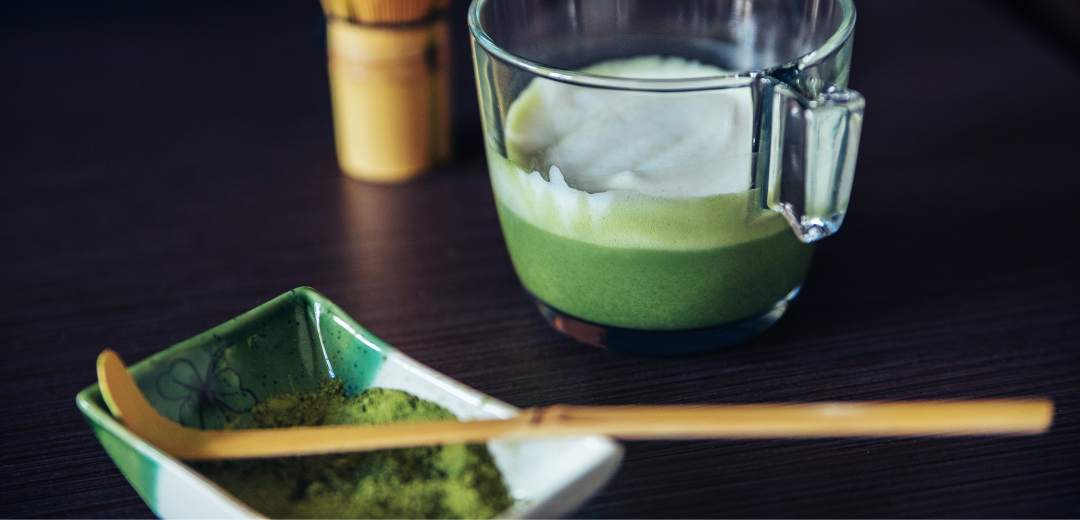
Calm-focus matcha latte
Ingredients
◆1 teaspoon matcha powder
◆1 cup milk or unsweetened plant milk (such as almond or oat)
◆1 teaspoon honey or preferred sweetener, to taste (optional)
Instructions
- Warm the milk over low–medium heat until steaming but not boiling.
- In a small bowl, sift the matcha if needed, then whisk with a splash of hot water to form a smooth paste.
- Pour the paste into the warm milk, whisking or frothing until fully combined and lightly foamy.
- Add honey or sweetener if you like, taste, and adjust.
- Pour into your favorite cup and enjoy as a mid-morning or afternoon focus ritual.
For more traditional preparation tips, see our step-by-step guide How to Make Matcha Tea.
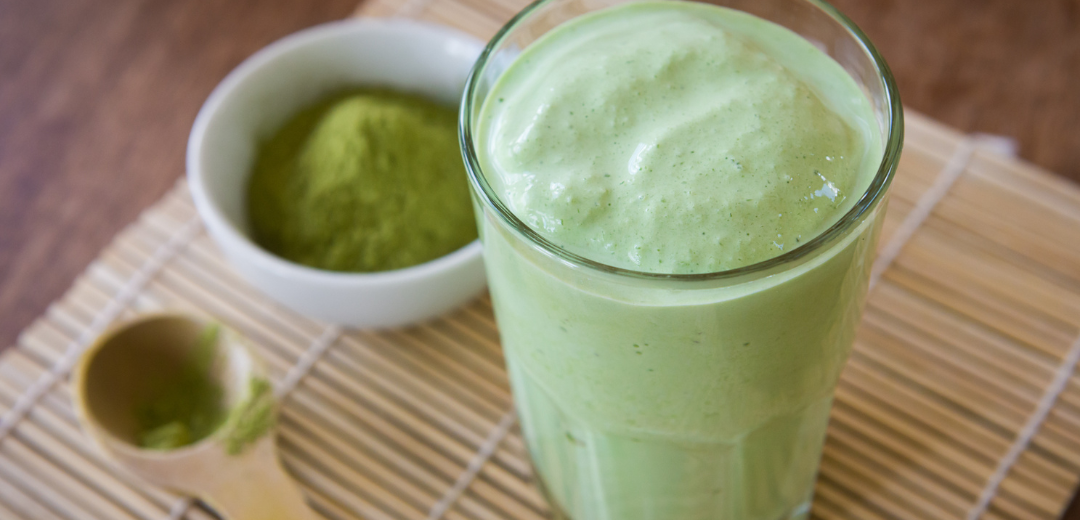
Bright matcha smoothie for busy mornings
Ingredients
◆1 teaspoon matcha powder
◆1 ripe banana
◆1 cup milk or unsweetened plant milk
◆½ cup frozen blueberries or mixed berries
◆1 tablespoon honey or date syrup (optional)
Instructions
- Add all ingredients to a blender.
- Blend until smooth and creamy.
- Taste and adjust sweetness or thickness with extra milk or ice.
This smoothie is a convenient way to combine matcha with fruit and fiber for a quick breakfast or study snack.
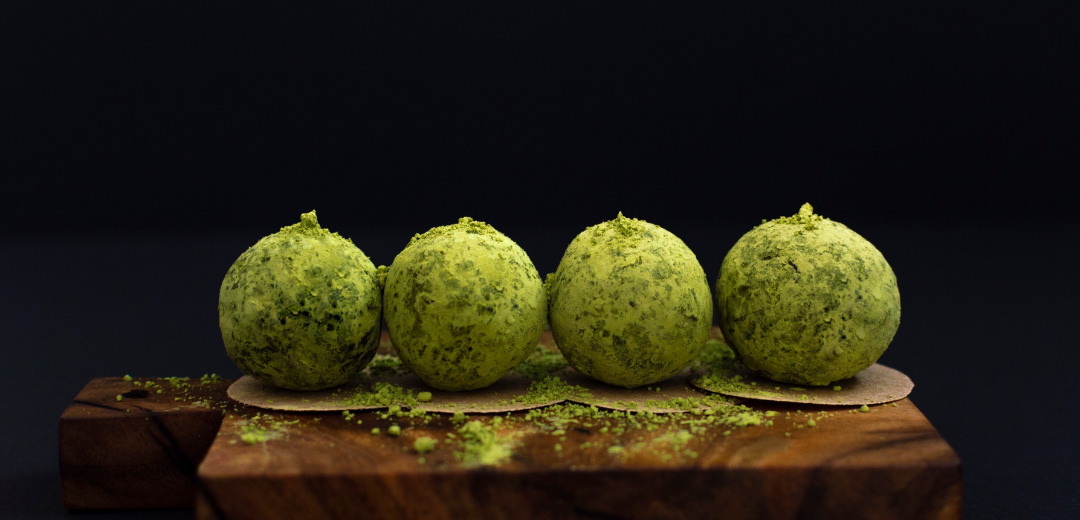
No-bake matcha energy bites for study sessions
Ingredients
◆1 cup rolled oats
◆½ cup almond butter or other nut butter
◆¼ cup honey or maple syrup
◆¼ cup unsweetened shredded coconut
◆1 tablespoon matcha powder
Instructions
- In a mixing bowl, combine all ingredients and stir until the mixture holds together.
- Roll into small balls, about 1 tablespoon each.
- Chill in the refrigerator for at least 30 minutes to firm up.
- Store in an airtight container in the fridge for up to several days.
These bites make a handy snack for long study sessions or creative work blocks when you want something satisfying without a heavy feeling.
Final thoughts
Matcha will not turn you into a genius or cure memory problems, but it can be a beautiful daily ritual that supports focus, calm alertness and overall wellbeing. Its blend of caffeine, L-theanine and antioxidants makes it a meaningful alternative to sugary energy drinks or endless cups of coffee.
When you combine matcha with habits like regular movement, good sleep, and a nutrient-rich diet, it becomes one more small, enjoyable way to look after your brain over the long term.
If you’d like to explore different styles of Uji matcha for lattes, smoothies or traditional usucha, you can browse our curated collection on the All Matcha Products page, or discover our premium tools and bowls on the Matcha Sets page.
Ready to create your own matcha focus ritual?
Organic Uji matcha for daily lattes, smoothies and traditional bowls.
Shop all matcha Premium matcha sets
About the Author
Luke Alcock is the founder of Premium Health Japan, based in Kyoto and Osaka. He works directly with Uji tea farmers, sourcing authentic ceremonial-grade matcha and supporting brands around the world with OEM and private label services.