


How Matcha Is Made
From the leaf to your tea bowl, the journey of authentic Japanese matcha is remarkably intricate. Each stage — shading, harvesting, steaming, drying, and milling — shapes the final flavor, aroma, color, and nutritional value of the powder.
Quick answer: Matcha is made by shading tea plants for several weeks before harvest, steaming the picked leaves to lock in their color, drying them into a flaky leaf called tencha, then slowly stone-grinding the tencha into an ultra-fine powder. Shading builds umami and color; stone-milling gives matcha its silky texture.
How Japanese Matcha Green Tea Powder Is Made
Matcha comes from tea plants grown exclusively in Japan and is produced from carefully selected cultivars prized for sweetness, color, and umami. Only a small portion of all tea grown in Japan is suitable for high-quality matcha production.
Matcha Production Process: Step-by-Step
Producing true Japanese matcha requires specialist knowledge passed down through generations. Farmers, processors, and tea masters collaborate throughout the journey — from tending the plants to evaluating the finished tencha.
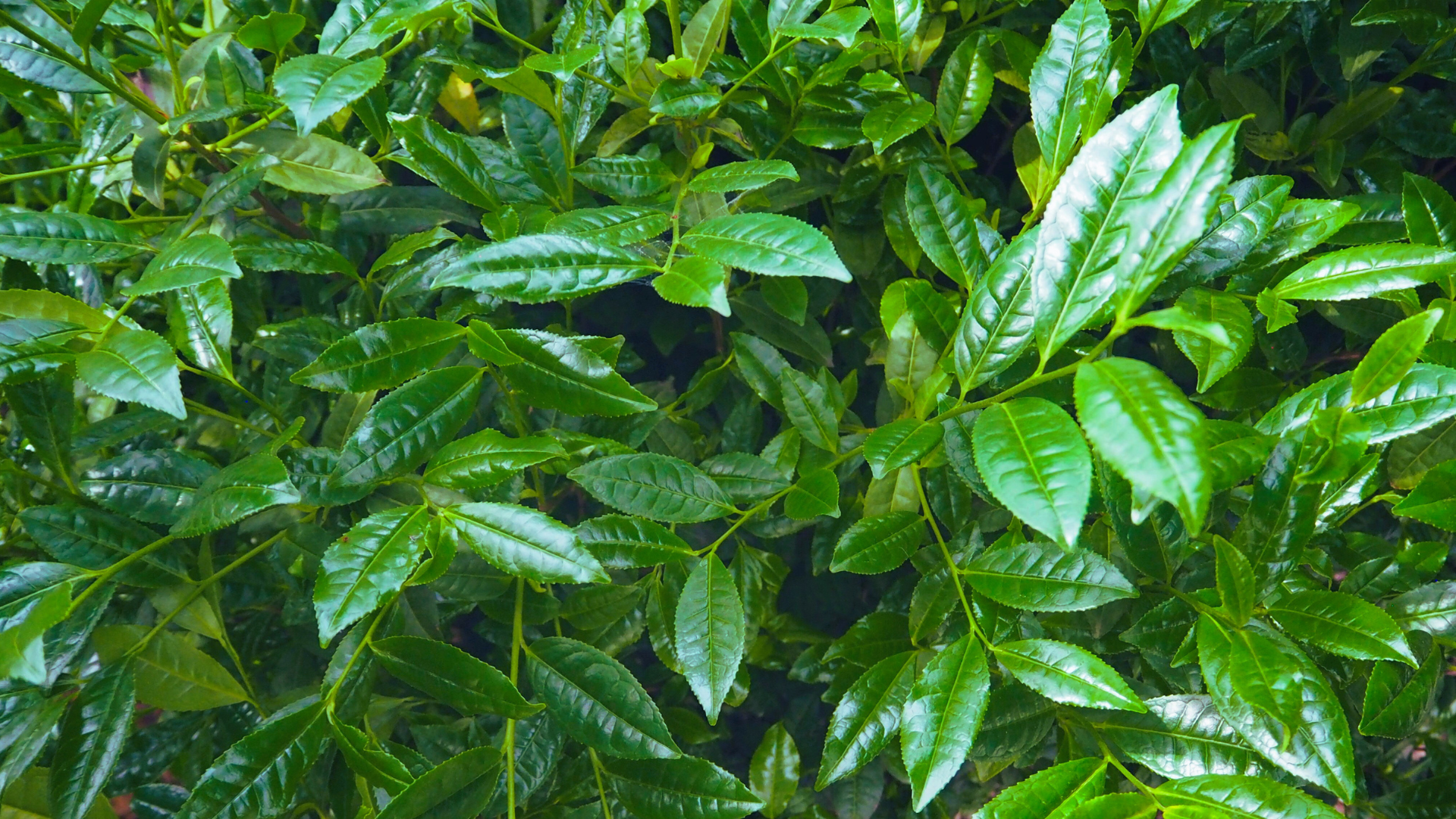
Can All Tea Plants Be Used for Matcha?
Matcha is made only from specific cultivars of Camellia sinensis chosen for sweetness, low bitterness, and their ability to produce a vibrant green color when shaded. While all matcha is tea, not all tea can become matcha — the plant variety matters just as much as the production method.
The Harvesting Process
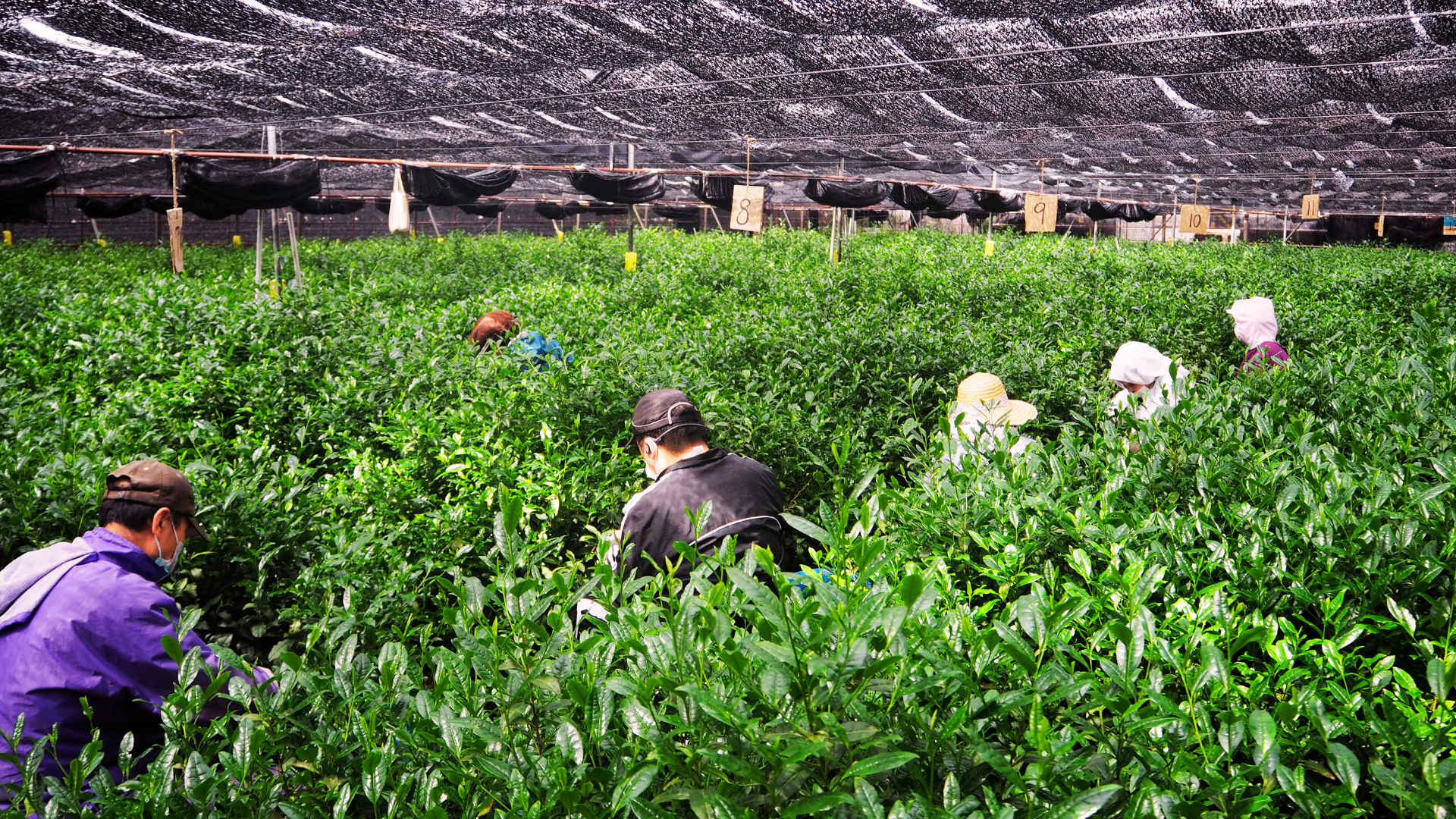
Harvesting typically takes place in spring when the youngest, softest leaves emerge. These leaves contain the highest levels of amino acids and produce the smoothest, sweetest matcha.
Shading: The Critical Step
Two to four weeks before picking, the tea fields are shaded. This reduces photosynthesis, dramatically increasing chlorophyll and L-theanine levels. The result is a vivid green color and a smooth, umami-rich flavor.
From Leaf to Tencha
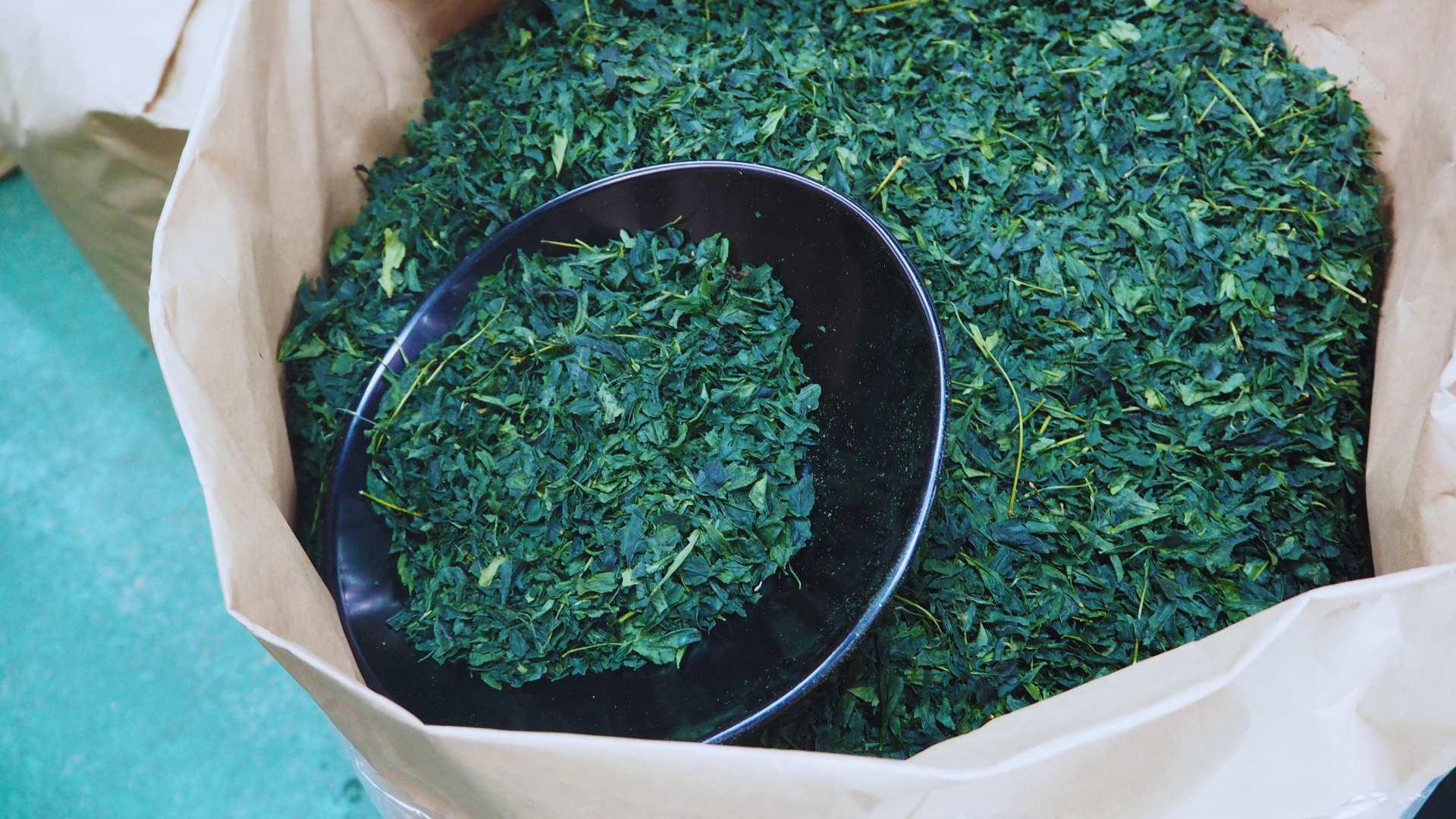
Immediately after harvest, leaves are steamed to prevent oxidation and preserve their bright color. After steaming, they are dried using large wind tunnels and then passed through finishing ovens where the leaves become “tencha.”
Understanding Matcha Harvest Seasons
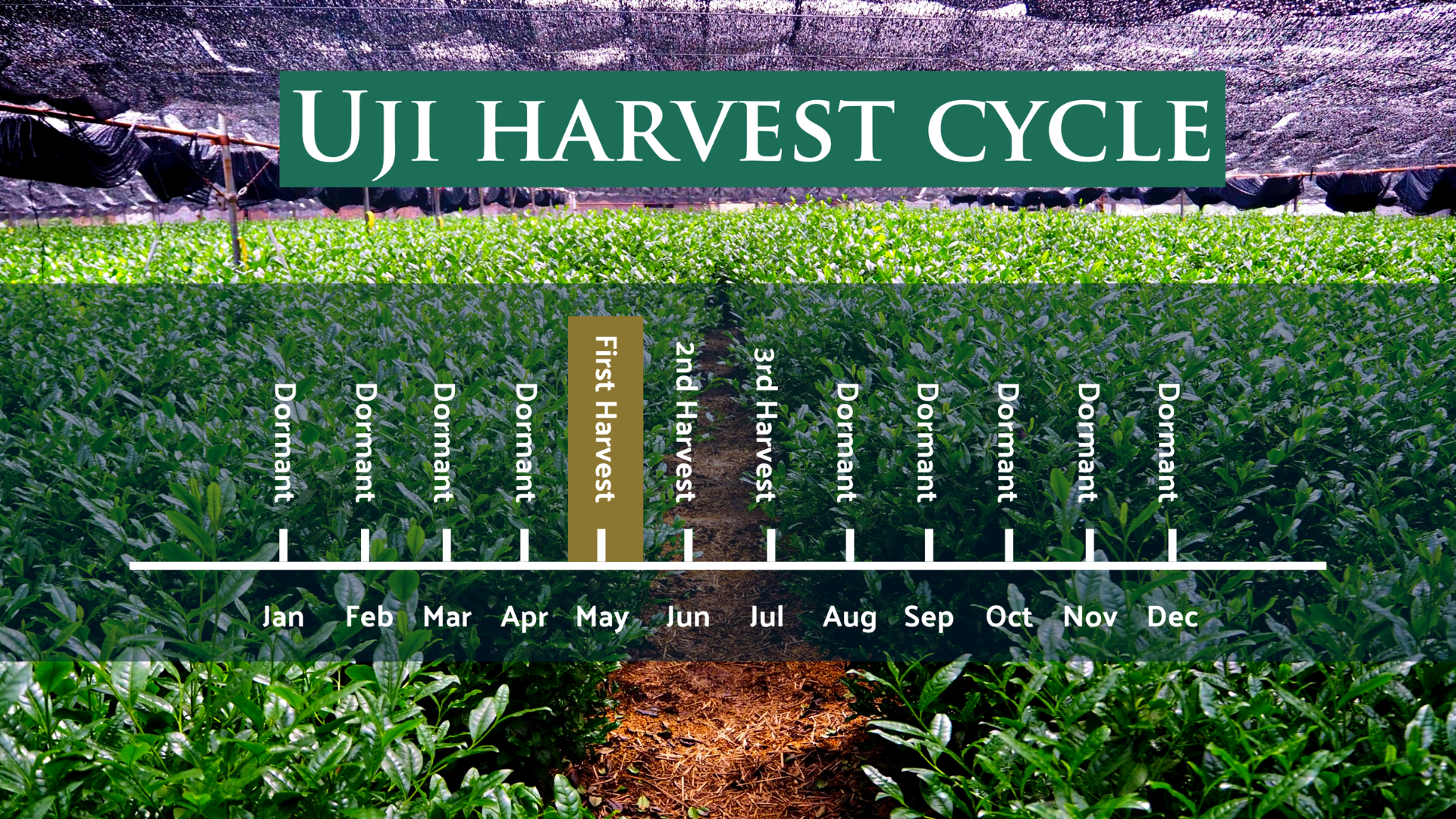
First harvest (Ichibancha): Late April–early May. The highest quality and richest flavor.
Second harvest (Nibancha): About one month later. Stronger flavor, less sweetness.
Third harvest (Sanbancha): Another month later. More robust and typically used for culinary applications.
Steaming Process
Freshly picked leaves are transported to a facility where they are steamed within hours. This step is vital in preserving color, aroma and nutrients.
Drying: Turning Leaves into Tencha
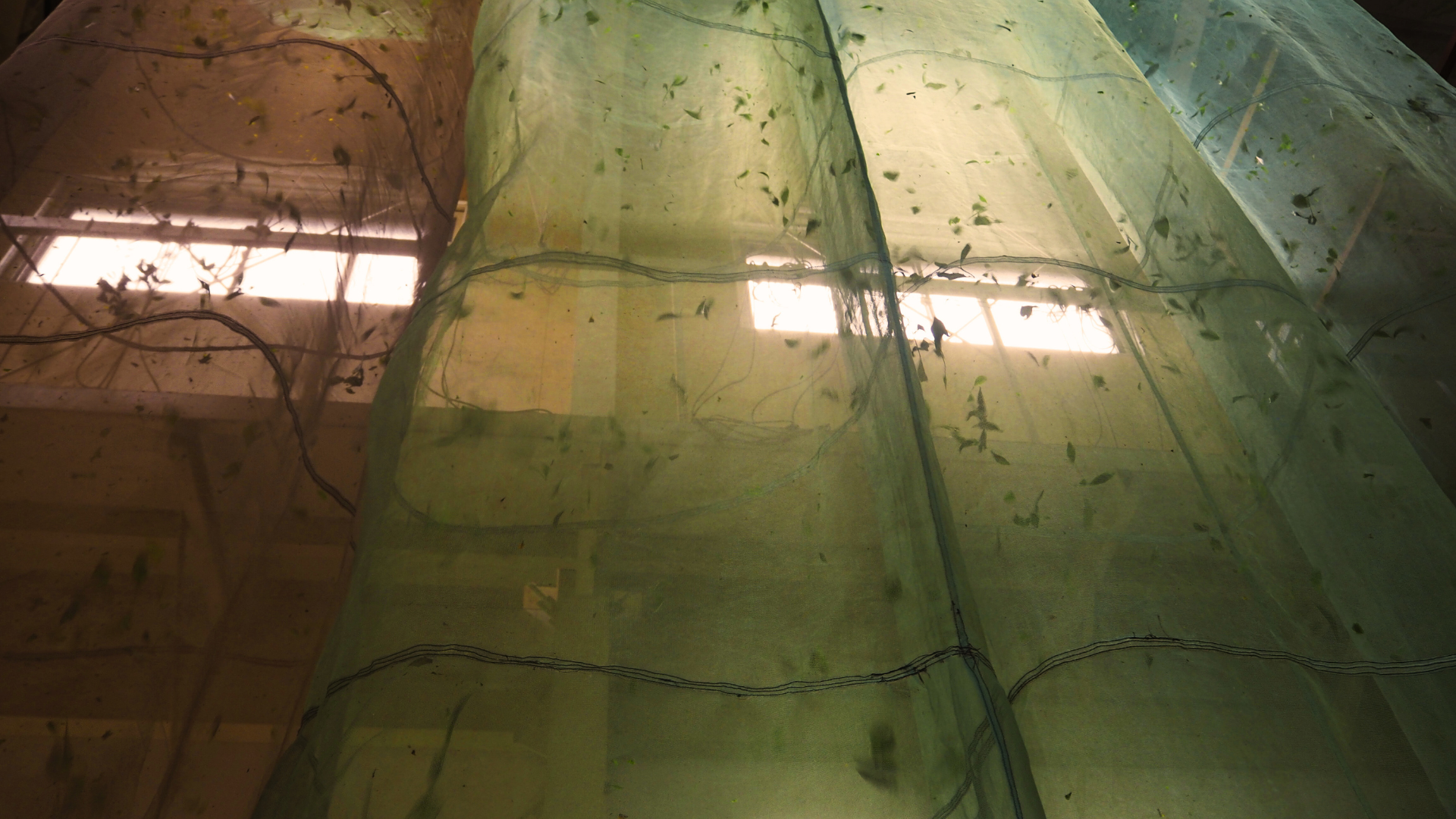
After steaming, leaves undergo wind-drying and heat-drying. The resulting flat, fragile material is tencha — the precursor to matcha.
The Traditional Stone Mill Process
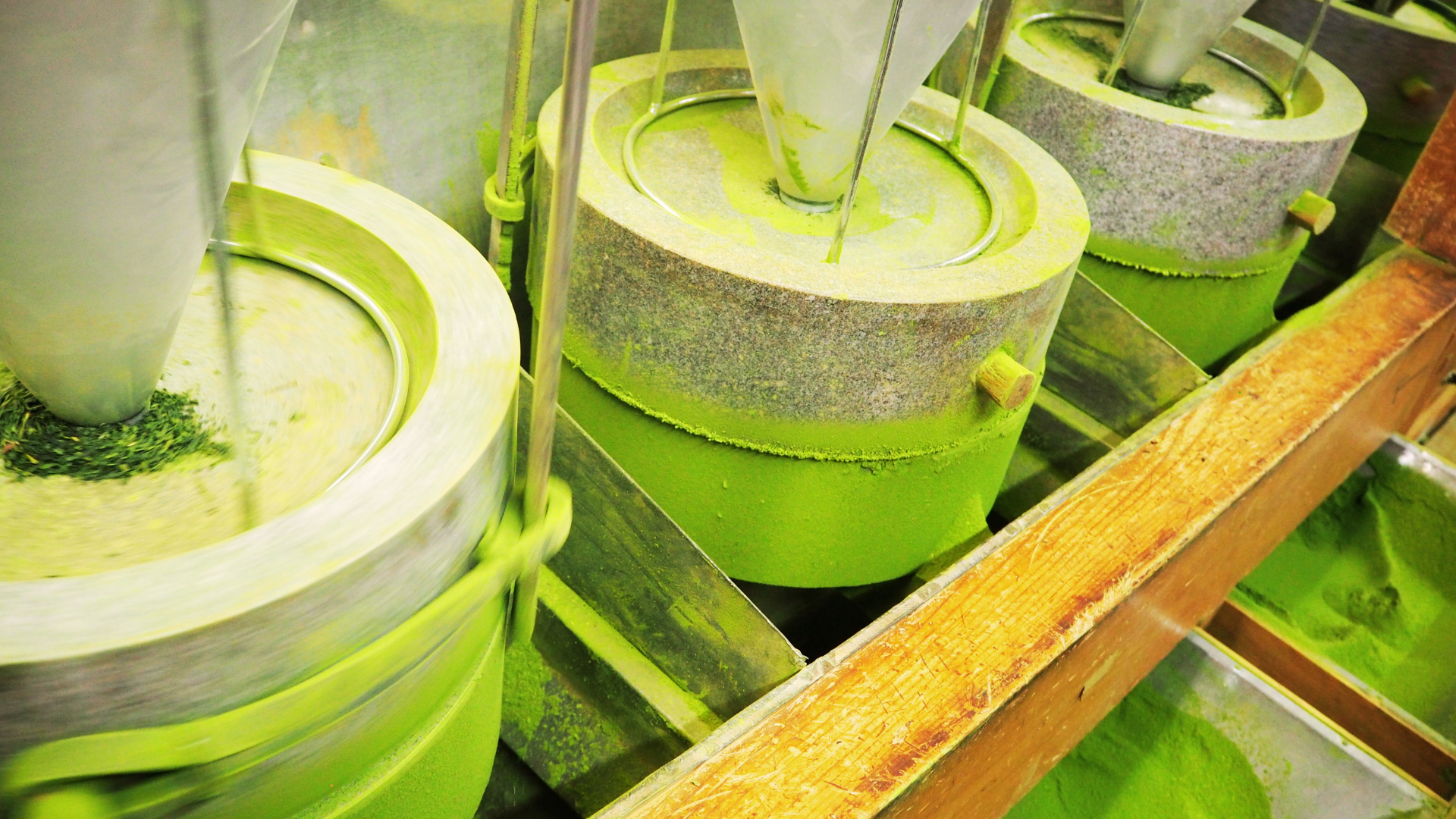
The hallmark of premium matcha is the use of slow, granite stone mills. Because matcha is ground into such a fine powder, it is more sensitive to air and light than whole leaf tea. This is why matcha shelf life and storage conditions play an important role in preserving freshness. Each mill produces just 30 grams of matcha per hour. The low temperature and slow rotation preserve aroma compounds and create extremely fine powder with natural variation in particle size.
Why Particle Size Matters
Superior matcha contains a spectrum of particle sizes, contributing to a smoother mouthfeel, better froth, and complex flavor. Producers carefully control mill speed — typically around 48 RPM — to achieve ideal texture. These steps are what separate matcha from standard green tea processing — see matcha vs green tea processing differences.
How to Make Matcha Tea
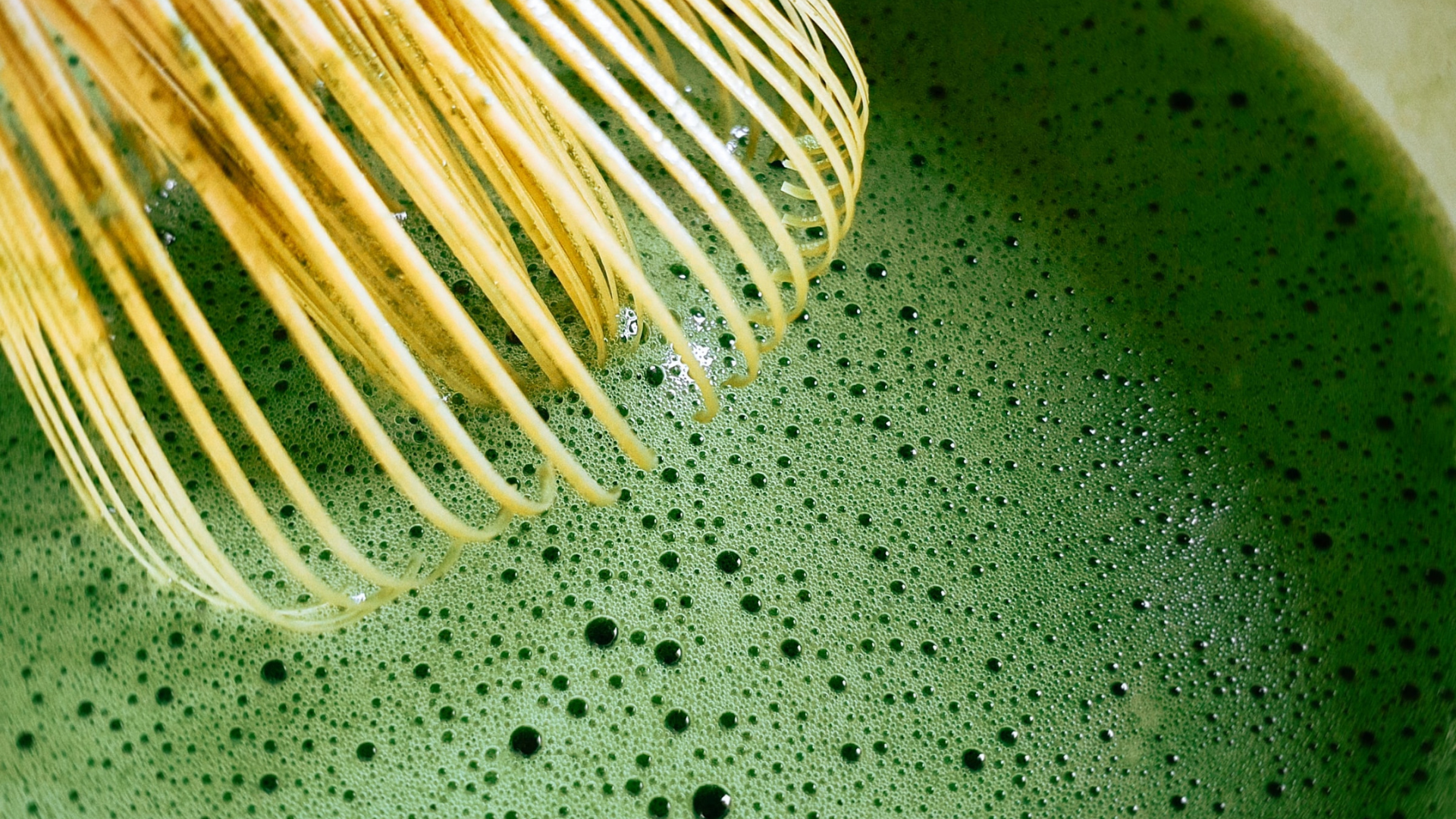
Whisk 1–2 grams of matcha with hot (not boiling) water using a bamboo whisk until frothy. The traditional method creates a silky, balanced bowl of tea. Learn more here.
Matcha Bamboo Whisk
The bamboo whisk (chasen) evenly blends matcha into water, creating the signature foam. A high-quality whisk improves texture and reduces clumping.
The Art of Matcha Production in Japan
Matcha production is a craft refined over centuries. Each step — from cultivar selection to stone milling — reflects Japan’s deep appreciation for tea culture.
How to Make Matcha Without a Whisk
Add matcha and warm water to a bottle, shake vigorously, and enjoy. This method works well for iced matcha too.
Modern Machines vs. Stone Mills
Some producers use high-speed milling machines for large-scale production. While efficient, they lack the nuanced particle structure and flavor complexity produced by traditional stone mills.
Matcha vs. Green Tea
Matcha is whole-leaf tea ground into powder — meaning you consume the entire leaf. This gives matcha a richer flavor and higher nutrient density than brewed green tea.
Ceremonial Grade Matcha
Ceremonial-grade matcha is made from the youngest, highest-quality leaves, with stems and veins removed before milling. The result is vibrant, smooth, and ideal for drinking straight.
To explore our range of authentic Uji-grown matcha, visit our product collection below.
Good to know
How Matcha Is Made FAQs
How is matcha made?
Tea plants are shaded for several weeks, the young leaves are harvested and steamed, then dried and de-stemmed into a flaky leaf called tencha. The tencha is slowly stone-ground into the fine powder we know as matcha.
What is tencha?
Tencha is the steamed and dried leaf, with stems and veins removed, that serves as the raw material for matcha. Only after tencha is stone-milled does it become matcha powder.
Why is matcha shaded before harvest?
Shading for two to four weeks before picking reduces photosynthesis. This raises chlorophyll for a vivid green and L-theanine for smooth umami, while limiting the bitterness found in unshaded leaves.
Why is matcha stone-ground?
Granite stone mills grind slowly and stay cool, protecting aroma and producing an extremely fine powder with a natural range of particle sizes. High-speed machine milling is faster but loses that nuance.
When is matcha harvested?
The finest matcha comes from the first spring harvest (ichibancha) in late April to early May. Later second and third harvests are bolder and usually used for culinary matcha.
What is the difference between matcha and green tea?
With matcha you whisk and drink the whole leaf as powder, rather than steeping leaves and discarding them. That gives matcha a richer flavor and higher nutrient density than brewed green tea.
This educational content is not medical advice. Please consult a qualified professional regarding caffeine intake or health concerns.